Mark J. SalisburyMJS-OM-2026 · Sheet 00
Just show me the cool stuff
Operator's Manual · Model MJS · Connecticut, USA

I put AI
to work.
Then I show
my work.

I'm Mark J. Salisbury. Operator first. I build real tools with AI, test them until I trust them, and teach people the parts that hold up. This site is the manual.

Builds with AI agentsPublishes the failures tooTeaches what survives
Figure 1. Exploded view of how Mark puts AI to work Six stacked layers: a request, a lead that scopes it, a router that picks a small team, three workers, a verification layer, and a result that ships with receipts. 01 Request 02 Lead 03 Router 04 Workers 05 Verify 06 Result
  1. 01Request. A real job. Usually messy.
  2. 02Lead. Scopes it. Runs the cheap checks first.
  3. 03Router. Picks a small team. Or nobody.
  4. 04Workers. Build, review, red team.
  5. 05Verify. No evidence, no credit.
  6. 06Result. Ships with its receipts.
Fig. 1  Exploded viewHow a job moves when I run it
Equipment built

Proof you can click.

A small game label, a family dashboard, a fantasy adventure, a cable network for my kids, a civic lookout, a karaoke studio, a pattern studio, an open-source toolkit and a lot of websites. All built on my own time and documented in the open. No logo wall. No mystery metrics.

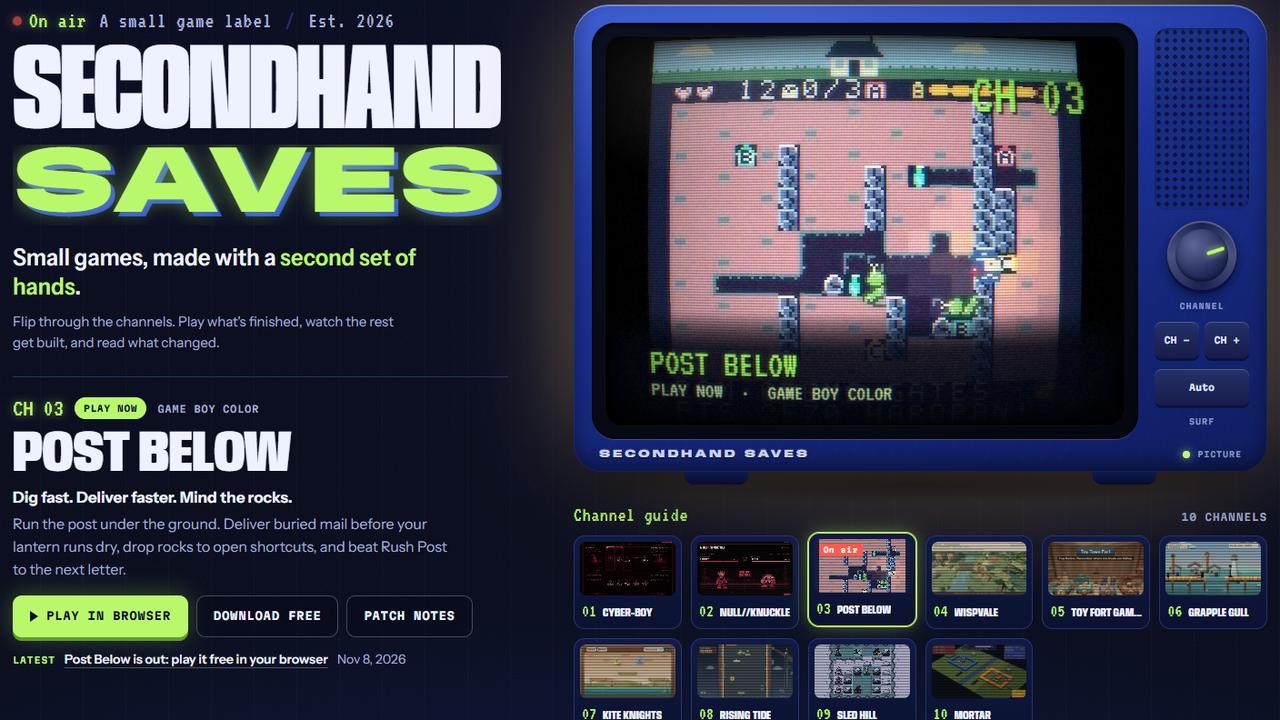
The Secondhand Saves home page: the label's name in big letters beside a blue CRT TV tuned to channel 3, Post Below, with a channel guide of ten games underneath.
Game label · Secondhand SavesPlay free now

I started a game label. The games are free.

Secondhand Saves is where my games go once they work. I direct, a crew of AI models helps design, build and test, and the site says so. Post Below, a real Game Boy Color cartridge, plays in your browser right now. Grapple Gull and Kite Knights are next. Play them, share them, mod them. Just don’t sell them.
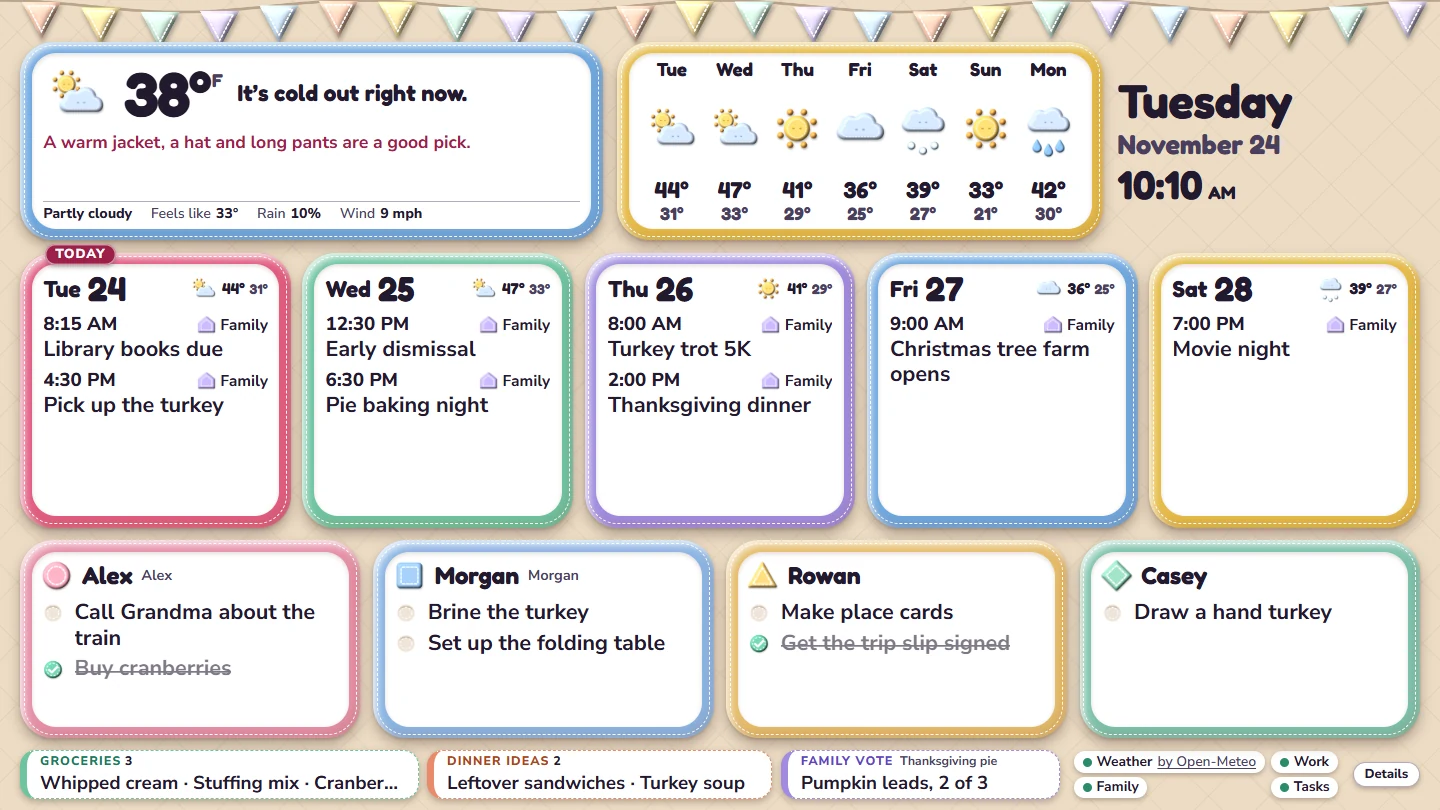
Pillow Fort, the chosen daytime design for BuryBoard, with soft illustrated panels and fictional demonstration lists.
Home build · BuryBoard + BerryDesign to deployment

A family dashboard. A strawberry with a job.

A spare screen became BuryBoard: shared calendars, weather, lists and a whole wardrobe of holiday styles. A repurposed phone became Berry, the voice-and-picture companion. Here is the build history, the designs we chose between, and the checks behind the cute parts.

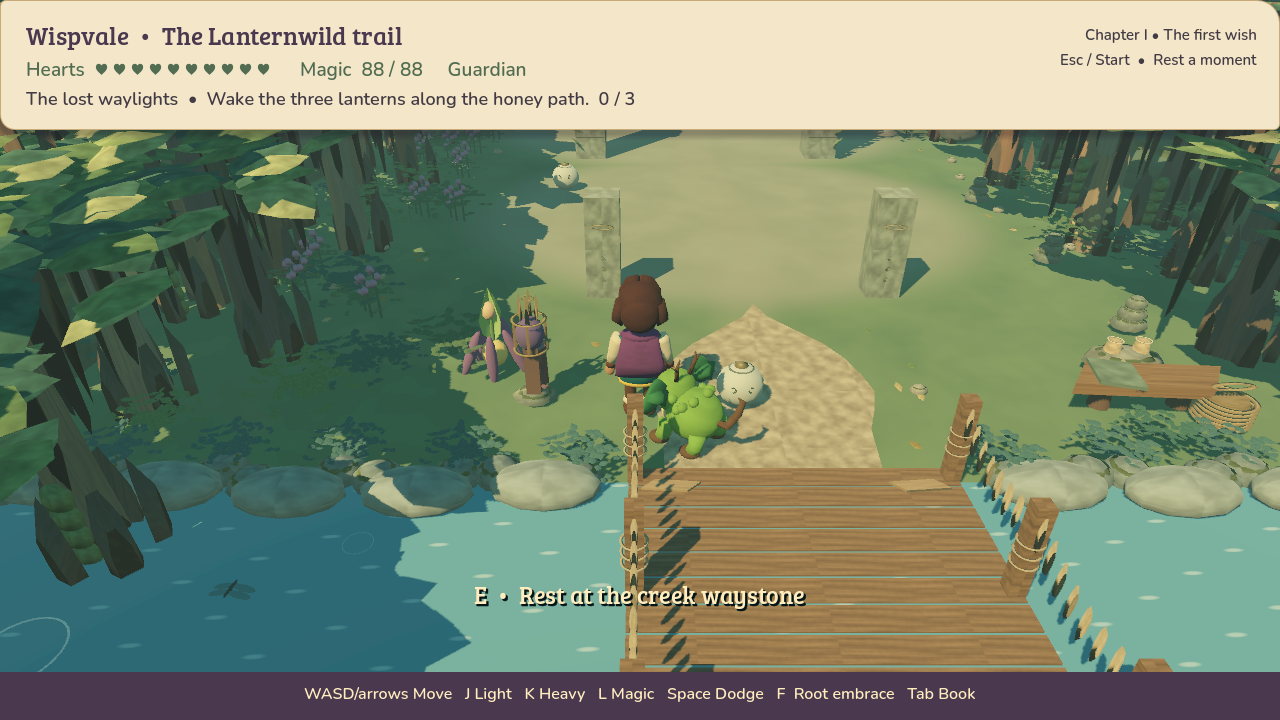
A character and companion near a rope bridge in the Lanternwild.
Game build · WispvaleIn development

A birthday game became a living storybook.

One offline browser file grew into a native Godot adventure. See the early builds, the journal redesign and the two guardian fights, with sound and the checks behind them.

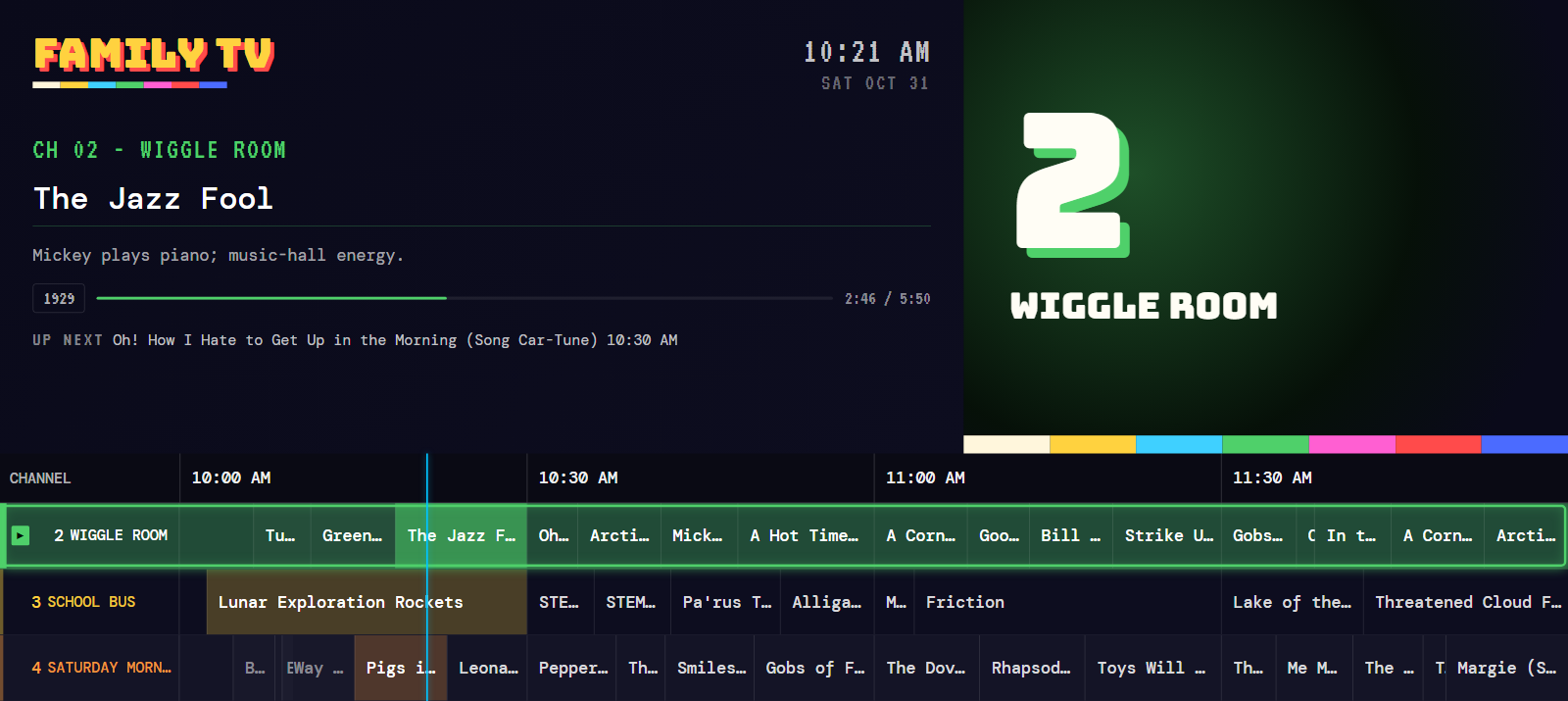
The Family TV guide: Wiggle Room on channel 2 playing The Jazz Fool from 1929, above a grid of channels and shows.
Home build · Family TVIn progress

Cable TV for two kids. No algorithm.

A private TV network for my 9-year-old and my 4-year-old: themed channels, a scrolling guide, an “up next” card before every show and old commercials in the breaks, on a $257 refurbished mini PC. The shelf is all public domain or openly licensed, checked title by title, and a checkup on my phone tells me when something is wrong.

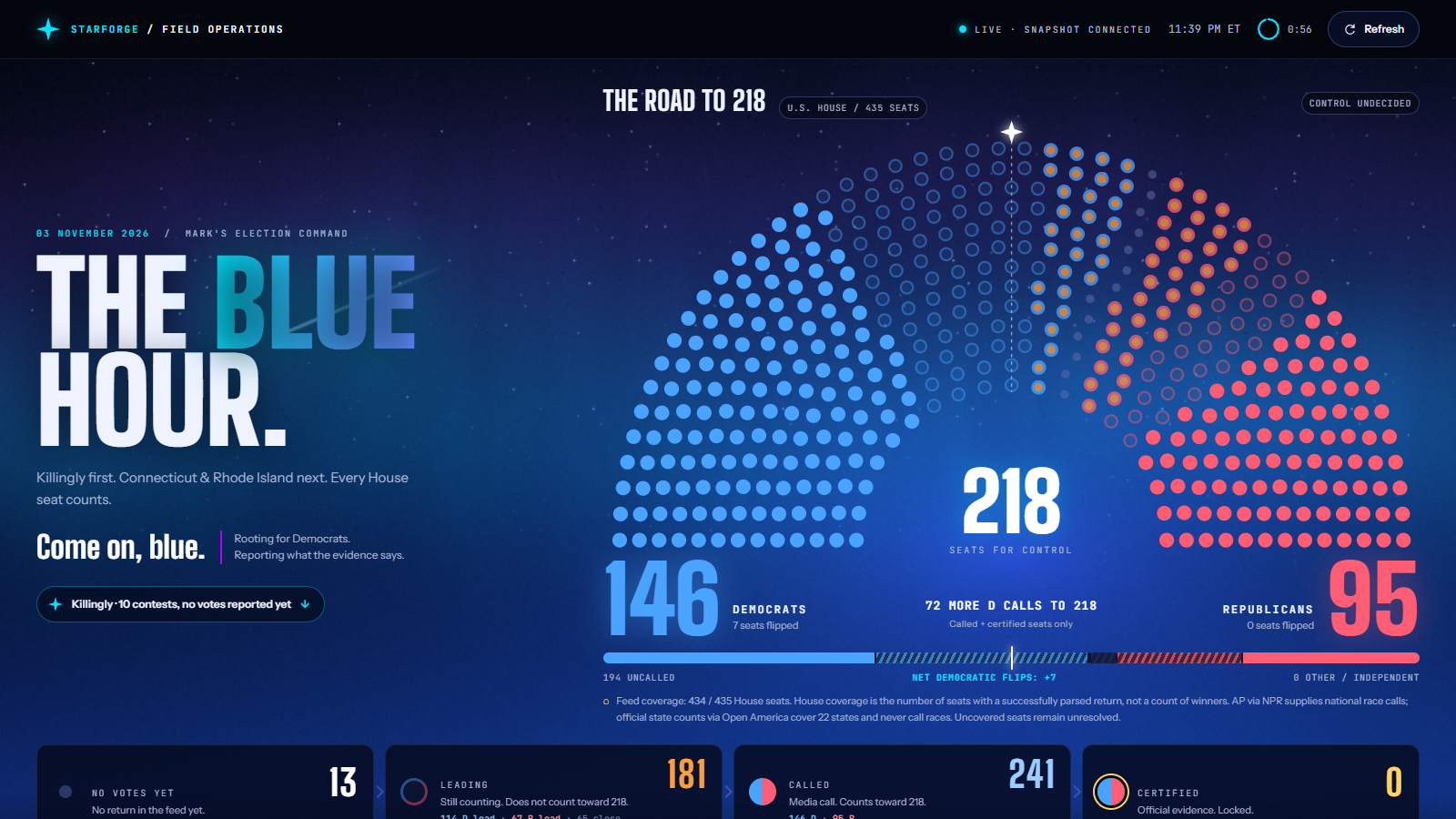
The Blue Hour on election night: a dusk sky and a half-circle of 435 House seats, solid where races are called and ringed where they are still counting.
Night build · The Blue HourElection night

435 seats. Killingly first.

My results board for November 3, 2026: my town first, then Connecticut, Rhode Island and every House seat. Codex built the engine and a private hosted site in an evening. Claude turned the House into a seat chart that shows what’s still in play, and every number links to its source.

Civic build · Town FamiliarPrivate app, public record
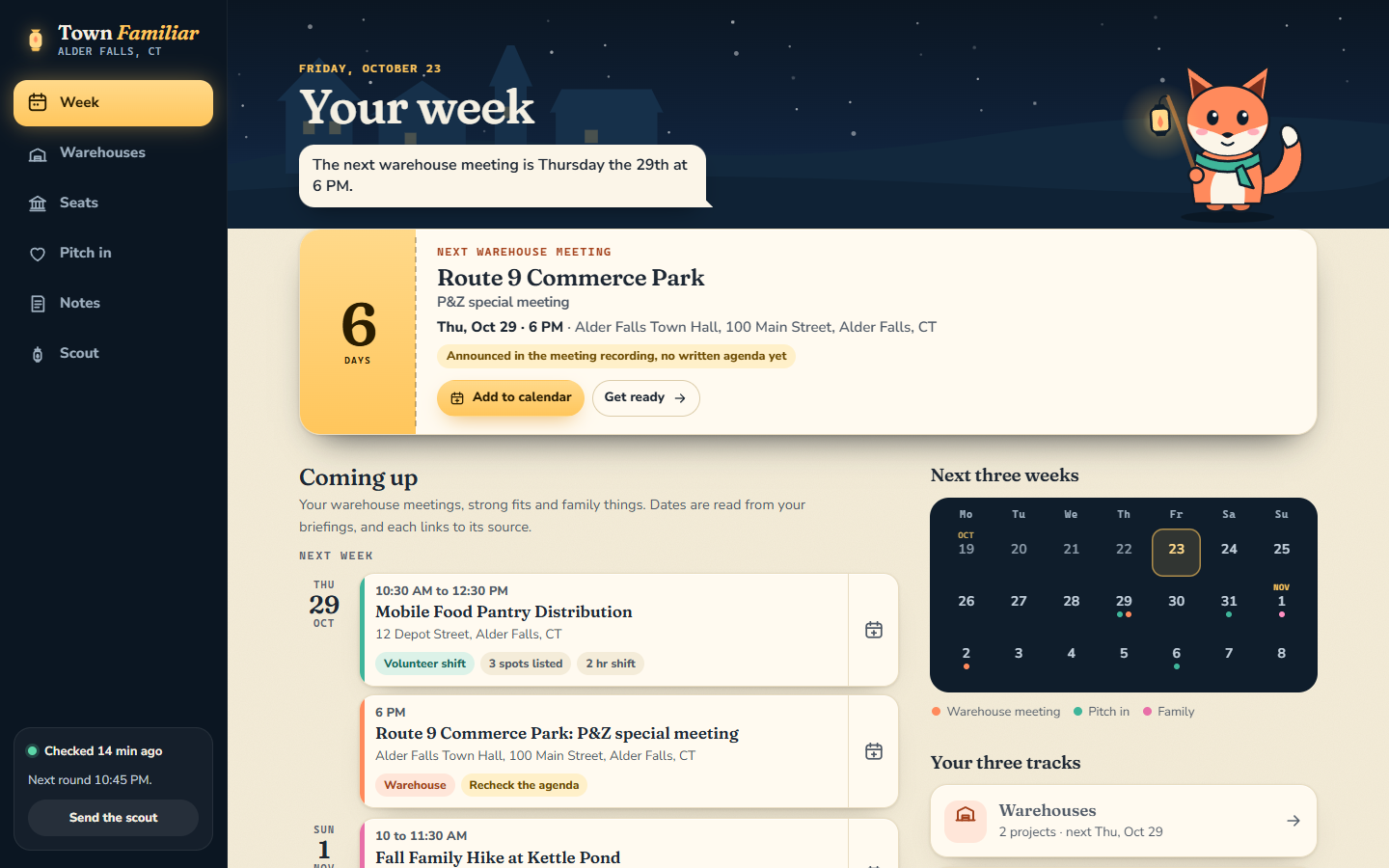
Town Familiar's Week page: a lantern-carrying fox, a countdown to the next meeting and a three-week calendar, shown with a made-up town.

A lookout for my town

It reads Killingly’s board pages, meeting packets and volunteer listings every hour, then tells me where to show up: one countdown, one phone call, a short list of shifts. AI built it. No AI runs it.

Music build · Basement KaraokeOn hold
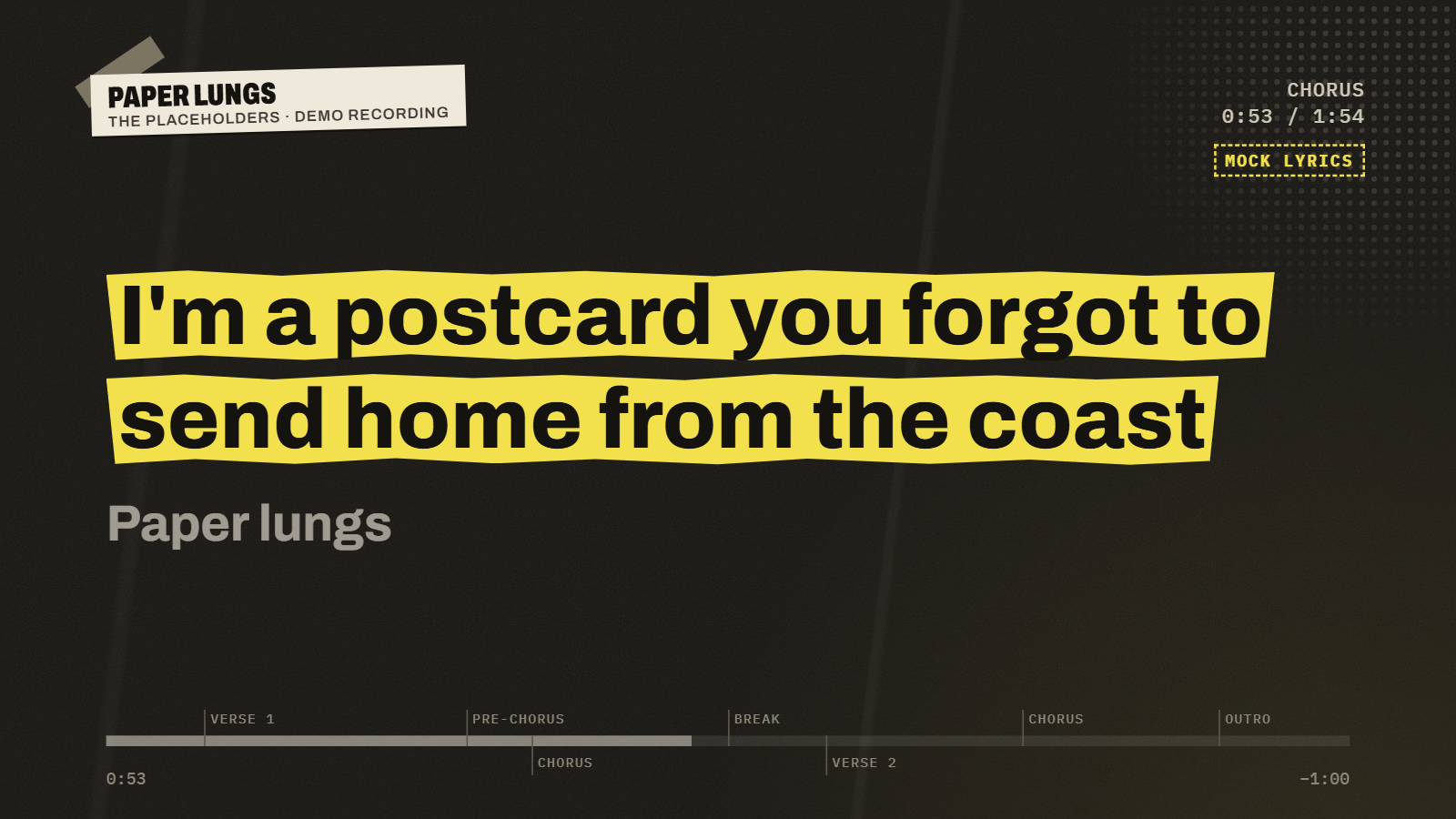
The Basement Karaoke singing screen: a lyric in black on a torn yellow highlighter strip, shown with a made-up band.

Any song I own, minus the singer

A home karaoke studio for the emo and post-hardcore the catalogs skip. Vocals stripped on a laptop, timed lyrics, and a TV screen styled like a show flyer. The build log fills in as it ships.

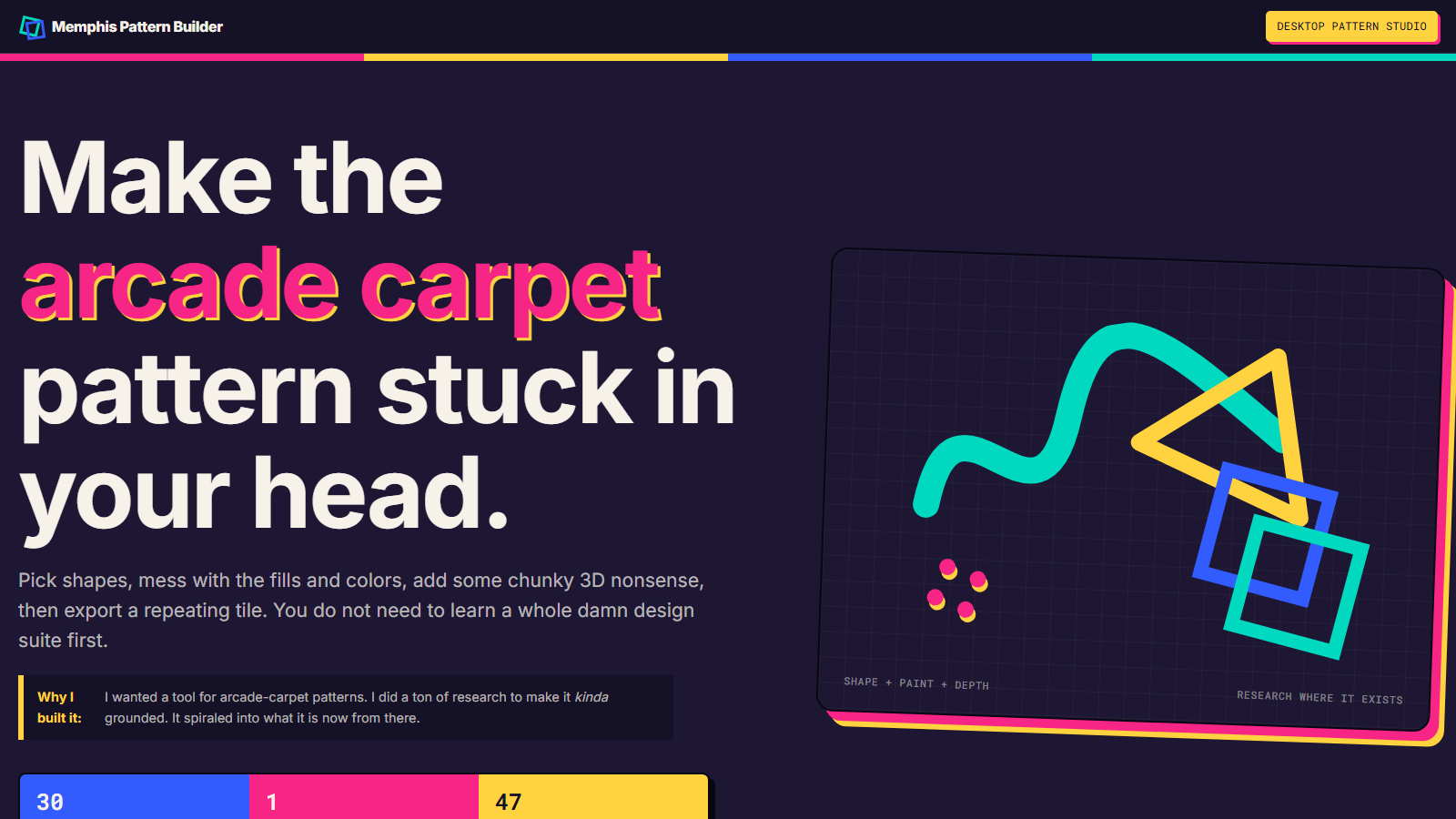
The Memphis Pattern Builder front page: Make the arcade carpet pattern stuck in your head, beside a card of teal, yellow, blue and pink shapes.
Design build · Memphis Pattern BuilderLive, free

Arcade carpet, from research to cut file

It started as a research library with a checked source behind every claim. It spiraled into a free pattern studio: hit Generate, fix it one shape at a time, then take home a tile, a wallpaper or a Cricut cut file. Here is how it got there, dead ends included.

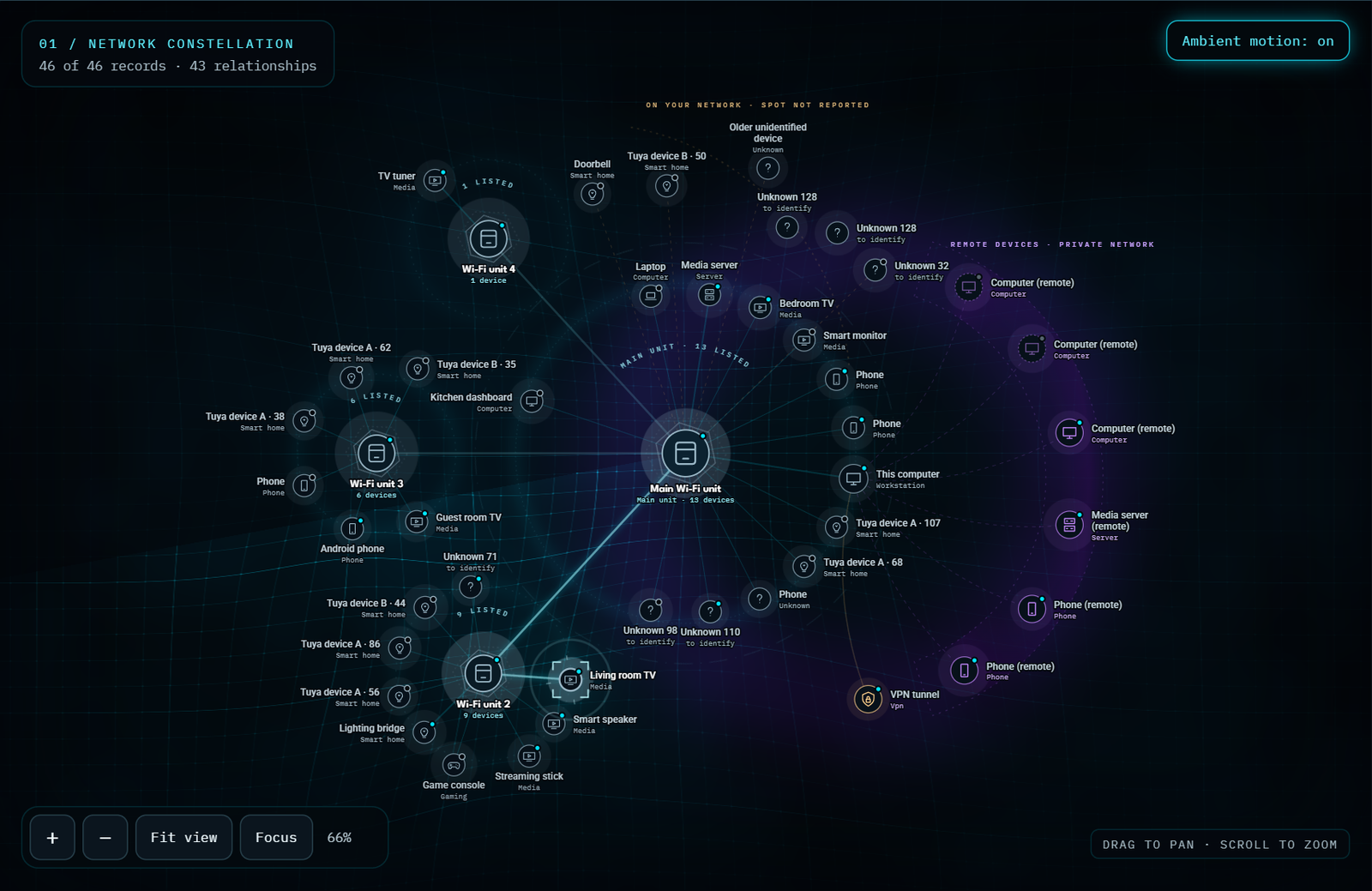
Network Atlas, shown with made-up names: a main Wi-Fi unit in the center with its devices on a ring, three more Wi-Fi units in orbit with their own rings, and a purple fan of remote devices.
Home build · Network AtlasRunning at home

What’s on our Wi-Fi? No guessing.

A private map of every device our network will admit to, which Wi-Fi unit it uses and what is still unknown, with a plain-English mode and a Check connection button for my wife. Codex built it in an evening. Claude made it move, then went hunting with open-source tools and turned up new evidence on a dozen mystery devices.

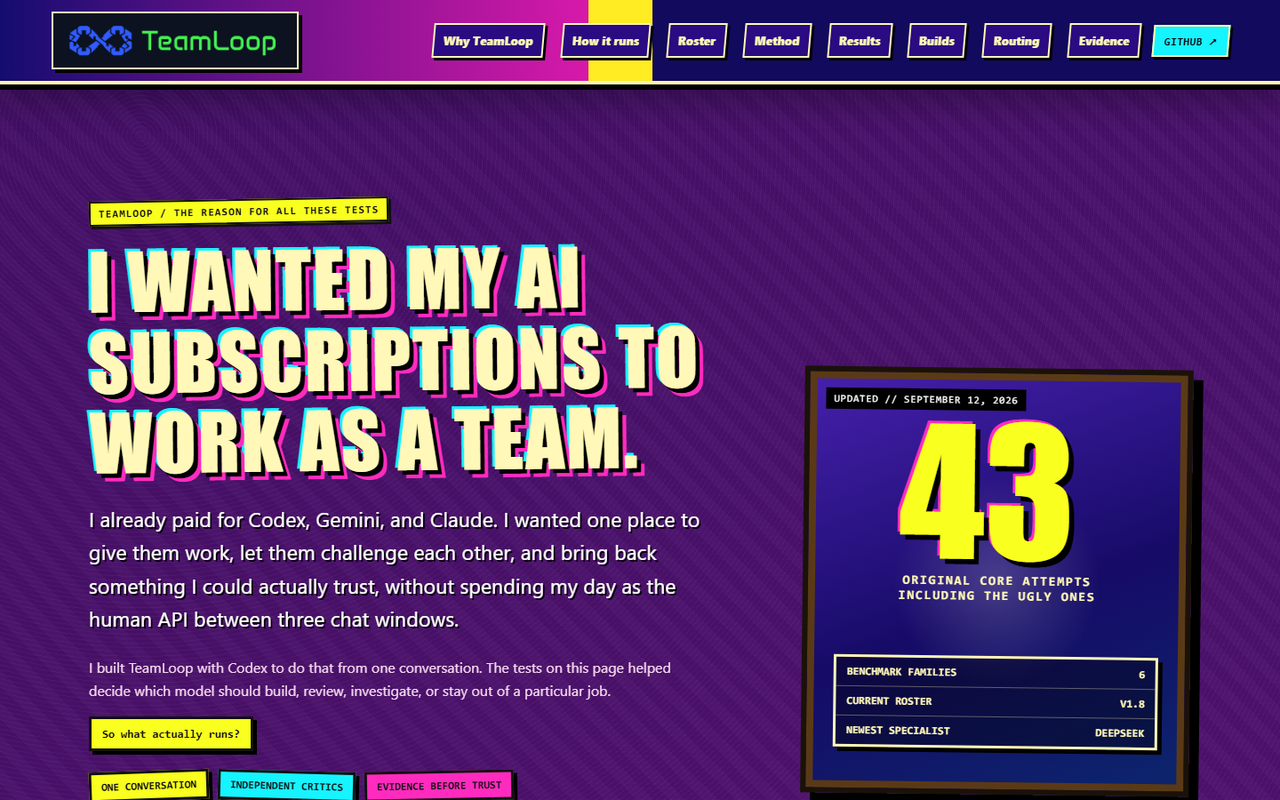
The TeamLoop field notes site: an arcade-styled page headed 'I wanted my AI subscriptions to work as a team' with a scoreboard reading 43 original core attempts.
Sheet 1.1 · Open sourcePublic preview

TeamLoop

One conversation. A deliberately small team. Evidence before agreement. I already paid for Codex, Gemini, and Claude. I wanted them to work as a team without me becoming the human API between three chat windows. So I built the toolkit that does it, then published the tests that shaped it.

  • LicenseApache 2.0
  • Runtime dependenciesZero
  • Field study43 original attempts, ugly ones included
  • At release67 local software tests passing

Want to watch the team work? The Dream Machine puts every AI session on my machine in an 8-bit arcade room.

Sheet 1.2 · Web design25 sites
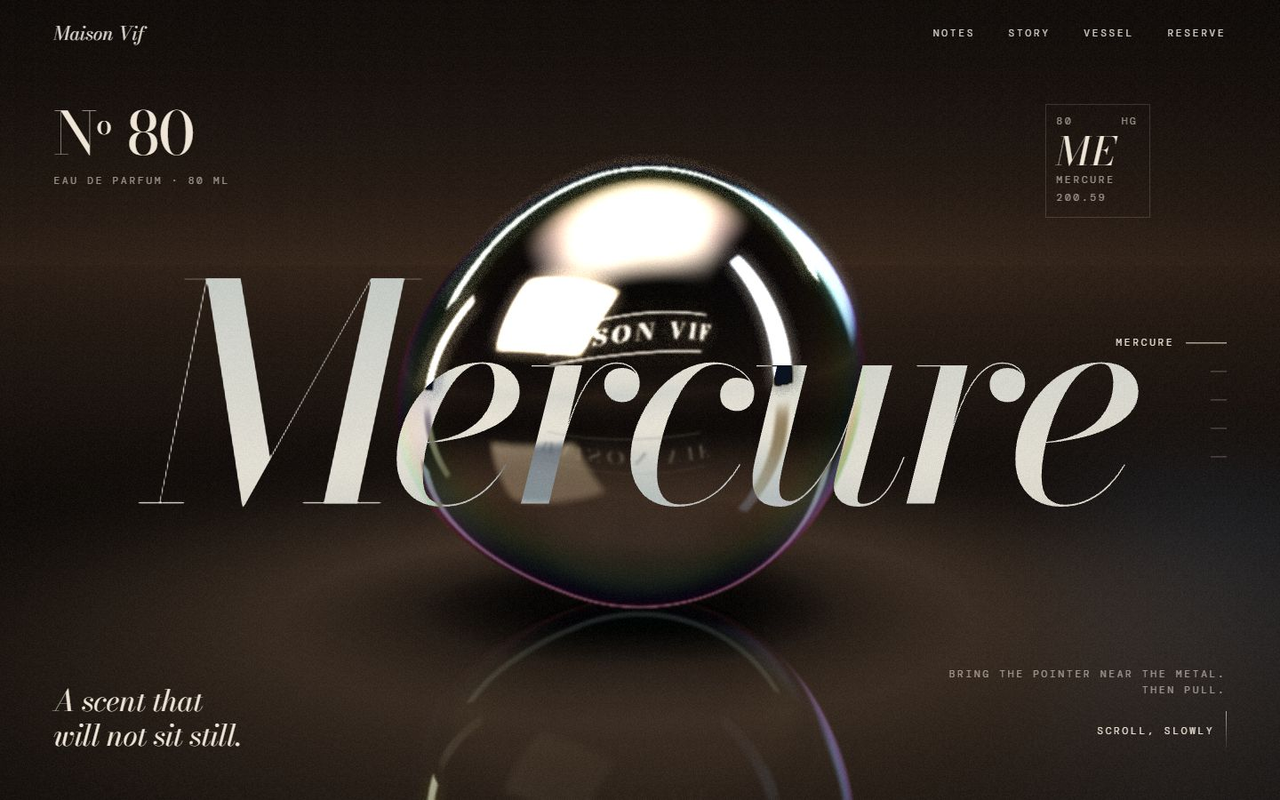
A liquid chrome sphere on a dark floor behind the word Mercure in large italic serif type.

Websites, for the love of it

Twenty-five single-file sites built in three sittings. Liquid chrome, a playable arcade, a synth you patch by hand, a trail race flown over a real mountain. Design is the part I do for fun.

Sheet 1.3 · ToolsFree
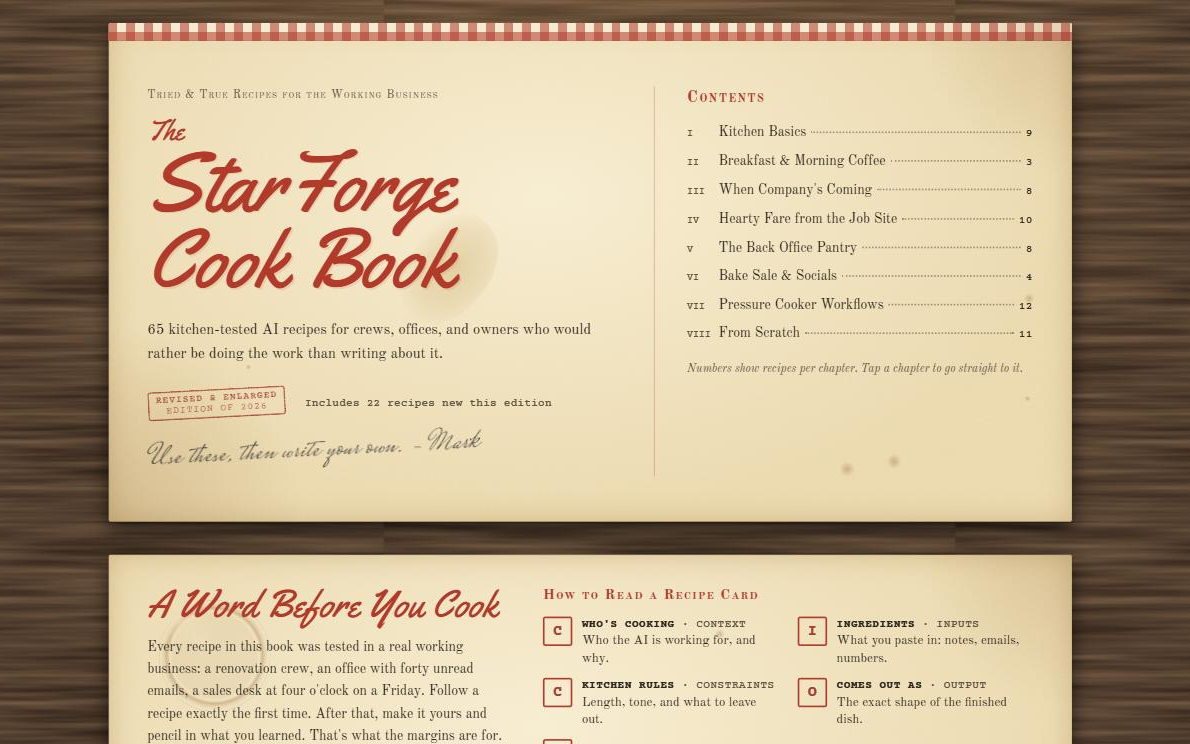
The StarForge Cook Book title page: a 1950s-style recipe box with a red gingham border, a chapter list, and the line 'Use these, then write your own.'

Tools that do a job

A book of 65 AI recipes, a pattern studio for 80s arcade carpet, a gradient studio, a shader shelf, a service-area map maker. No signup on any of them.

Sheet 1.4 · Games and funJust for fun
Mark's Anime Gate of Truth: gold lettering over a faint alchemy circle, with stats for titles logged and episodes consumed.

The weird stuff

My anime history kept like an alchemist’s ledger, an infomercial for a glowing box, two fighting games you can play in this tab and an arcade shooter. Nobody assigned these.

Full equipment list →The range, on one sheet →Everything you can click →

Identification plate

Designation
Mark J. Salisbury
Type
Operator. Builder. Teacher.
Base
Connecticut, USA
Input
Messy, real-world work
Day job
AI Outcomes Manager, GleanPersonal site. Views are my own.
Output
Working tools. Tested claims. People who can run them.
Also
Founder, StarForge DynamicsAI training and advisory
Known limits
Operator, not a career engineer.I build with AI agents and test before I trust.
Game label
Secondhand SavesSmall games, made with a second set of hands. Free to play, share and mod.
Instruction

Most AI training teaches the tool. I teach the work around it.

Sessions start with the jobs people already do and the friction they already feel. People leave with a working example, a way to check the output, and a process that still works on Friday.

T-01

AI Workshop Series

Four 90-minute sessions for small-business owners with the Northeastern Connecticut Chamber of Commerce. Mixed-skill room. Every session builds one guided artifact and one the participant owns. Open the sessions and handouts →

Fall 2026
T-02

AI in your daily workflow

Guest talk for the Thompson Business Association, built from a survey of their members. Three live demos and one prompt run side by side in ChatGPT, Gemini, and Claude. No vendor pitches.

May 2026
T-03

Team training and longer programs

Workshops and multi-session programs for organizations run through my company, StarForge Dynamics.

StarForge

How I teach →How I keep a build record →Use the Build Record template →

Operating principle

AI has to work after the demo.

Anybody can make a model do a trick. The job starts when the trick has to survive a Tuesday. I work in three moves, in this order, every time.

STEP 1BUILD

Put it to work.

Start with a real job, not a model. Find the step that eats the afternoon, build the smallest tool that removes it, and hand it to the person who owns the work.

STEP 2TEST

Try to break it.

Near-correct is the dangerous kind of wrong. I run the ugly cases, bring in a second model only when the risk earns it, and keep the receipts. No evidence, no credit.

STEP 3TEACH

Hand over the manual.

A tool only one person can run is a liability. I teach the people who own the work how it runs, how to check it, and when to stop trusting it.

Live demonstration

Run the loop yourself.

This is how my open-source toolkit, TeamLoop, thinks about a job. Pick one and press run. Watch who gets called in, who gets left out, and what it takes for a claim to count.

Requestthe job Leadscope, check Routerwho, if any Reviewerindependent eye Red teamtries to break Builderisolated copy Verifyprove it Result+ receipts
Receipt tapeFig. 2
Ready. Press run.
Pick a job. Press run.Three prepared jobs. Three different right answers.
Prepared examples. The demo makes no live AI calls. This site measures engagement as described below.The real toolkit is on GitHub →
Colophon

This manual is also the demonstration.

I built this site the way I build everything now. I wrote the brief, directed AI agents through the build, and checked the work. No template. No page builder. If you are wondering what AI can do in the hands of someone who knows the job, you are looking at it.

0
Frameworks. Hand-authored HTML, CSS, and SVG.
0
Third-party trackers or analytics cookies. First-party measurements explained.
2
Spot inks. Flip to blueprint in the header.
100%
Readable with JavaScript off. View source. It is tidy.